When Women Leaders Talk AI, Culture Takes Center Stage
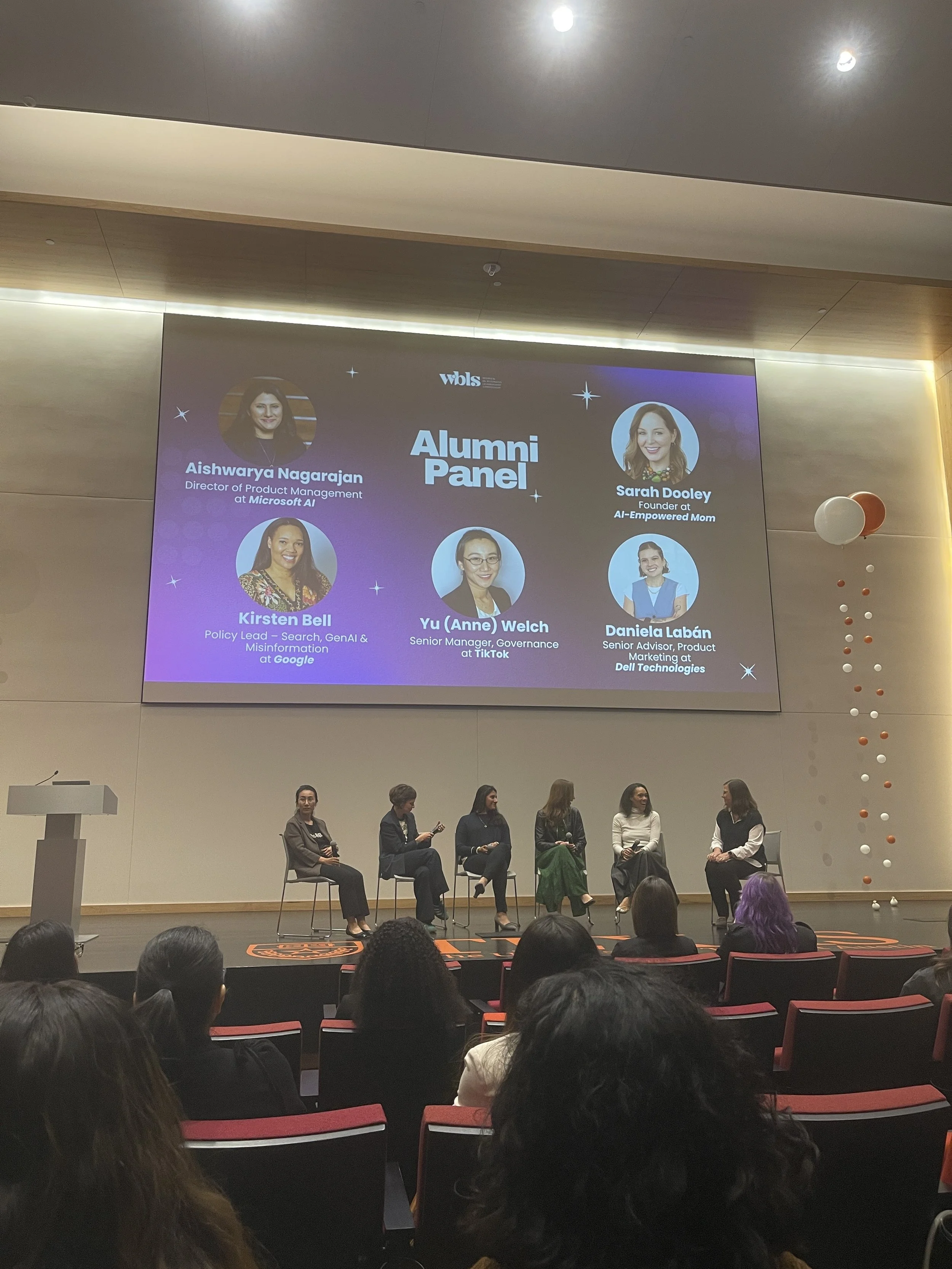
I attended a panel this week on Leadership in the Age of AI, at the Women in Business Leadership Symposium, hosted by the McCombs School of Business, Austin, TX.
The main thing I take from the evening is that AI adoption is not primarily a technology challenge. It’s a human and organizational one. And there is a lot leaders can do to engage systems, culture, and leadership practices that set their team up for success, no matter where they land on the ai adoption spectrum.
Here are the panel insights I keep coming back to:
1. Human-centered systems matter more as automation increases.
AI accelerates work—but without clear decision rights, feedback loops, and governance, it also accelerates confusion. The panel was clear: responsible adoption isn’t about adding tools; it’s about designing systems that help people make better decisions with them.
2. Keeping “humans in the loop” is a cultural choice.
This wasn’t framed as a technical constraint—it was a leadership one. Staying close to users, understanding real needs, and creating space for reflection and challenge are cultural practices. They don’t happen by default, and they can’t be outsourced to software.
3. AI frees time—but culture determines how that time is used.
One of the most compelling tensions raised was this: AI can give teams time back, but what happens to that time depends entirely on norms. Does it get reinvested in learning, relationship-building, and strategic thinking? Or does it simply invite more output and pressure?
4. Bias doesn’t disappear with better tools—it scales faster without intention.
The panel spoke candidly about bias detection as an ongoing, iterative practice—not a one-time fix. Diverse users, continuous feedback, and leaders willing to question outputs (rather than defer to them) were named as essential conditions.
5. Culture shows up in how AI is adopted, not just whether it is.
Across examples, the difference wasn’t technical sophistication—it was posture. Teams that approached AI as a shared capability-building effort (rather than a productivity mandate) created more alignment, learning, and resilience.
6. Leadership in this moment requires comfort with ambiguity.
The most transferable skill named wasn’t technical fluency—it was the ability to move forward without perfect information, stay anchored in values, and adapt without burning out teams.
What this panel reinforced for me is simple, but not easy: tools will keep changing, but leadership and culture still have to be practiced—intentionally and together.
If you’re navigating this moment with your team, I’d love to hear what’s resonating—and where the biggest questions are showing up for you.